Plant-derived exosomes are nanoscale vesicles secreted by plant cells; their natural lipid bilayer structure endows them with excellent barrier-crossing delivery capability. BonaTech employs a gentle, membrane-based process that combines microfiltration (MF) and ultrafiltration (UF) to efficiently isolate high-purity, structurally intact plant-derived exosomes from crude plant extracts, providing stable and reliable technical support for transdermal absorption, oral delivery, and research on bioactive substances.
What Are Plant-Derived Exosomes
Plant-derived exosomes are nanoscale vesicles secreted by plant cells. Their natural lipid bilayer structure confers unique biocompatibility, making them valuable for barrier-crossing delivery and substance-transport research. Plant exosomes encapsulate bioactive molecules such as proteins, nucleic acids, and metabolic products, serving as a key medium in plant–microbe and plant–animal interaction studies.
Compared with animal-derived exosomes, plant-derived exosomes offer advantages including broad availability, high safety, and no ethical concerns. With strong barrier-crossing capability, they can penetrate intestinal or skin barriers to effectively deliver carried functional molecules—such as anti-inflammatory and antioxidant actives—to target sites, and are therefore widely studied in functional foods, skincare, and biopharmaceuticals.
Major Application Areas (Research & Preclinical Exploration)
Note: All of the above directions remain at the stage of scientific research and preclinical exploration. Under current regulations, exosomes have not been approved as drugs, medical devices, or cosmetics for market launch; related research and translation must strictly comply with national laws, regulations, and regulatory requirements.
Overview of the Plant Exosome Isolation and Purification Process
The core objective of plant exosome purification is to efficiently isolate high-purity, structurally intact nanoscale vesicles from complex plant tissue homogenates. Traditional small-scale processes are largely based on differential centrifugation and density gradient separation. While they can yield exosomes of a certain purity, they suffer from limited processing volume, high consumable costs, and poor process transferability. Currently, pilot-scale and process development are increasingly shifting toward Tangential Flow Filtration (TFF)—a scalable, gentle, and highly enriching technology.
BonaTech adopts a membrane filtration process combining microfiltration (MF) and ultrafiltration (UF) to achieve efficient conversion from crude plant extract to high-purity exosomes, balancing yield, purity, and vesicular structural integrity.
Traditional Centrifugation / Density Gradient
- Limited processing volume, hard to meet pilot-scale scale-up needs
- High consumable cost; large amounts of density-gradient media required
- High shear from high-speed centrifugation easily damages vesicular structure
- Process parameters difficult to transfer; high scale-up risk
BonaTech MF + UF Membrane Process
- Linearly scalable; process parameters easy to transfer
- Gentle operation, low shear, protects vesicular integrity
- High enrichment; concentration factor >10×
- No phase change or thermal damage throughout; bioactivity retained
Core Process Steps: MF Microfiltration + UF Ultrafiltration
BonaTech's plant exosome purification follows a two-step membrane route of "microfiltration clarification + ultrafiltration concentration and diafiltration", with raw-material pretreatment upfront, progressively removing impurities, enriching, and refining the product.
Raw Material Pretreatment
Plant tissue homogenization; removal of bulk solids; preparation of a suitable buffer system
MF Clarification
Hydrophilic-modified hollow-fiber membrane retains cell debris and macromolecular impurities; exosomes pass through with the filtrate
UF Concentration & Diafiltration
100–300 kDa UF membrane achieves high-fold enrichment while desalting and decolorizing, refining the exosome concentrate
Microfiltration (MF) Clarification: Remove Impurities, Ensure Flux
Targeting the high impurity load and high viscosity of plant tissue extracts, BonaTech uses high-performance hydrophilic-modified hollow-fiber membranes for clarification. The membrane elements are hydrophilic-modified to significantly enhance anti-fouling ability and water flux, efficiently retaining large particles such as cells, cell debris, and insoluble proteins, while allowing exosomes to pass through.
Ultrafiltration (UF) Concentration & Diafiltration: High-Fold Enrichment, Desalting & Decolorization
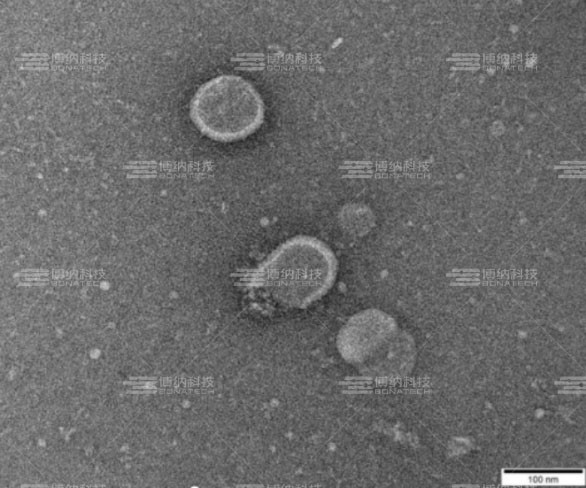
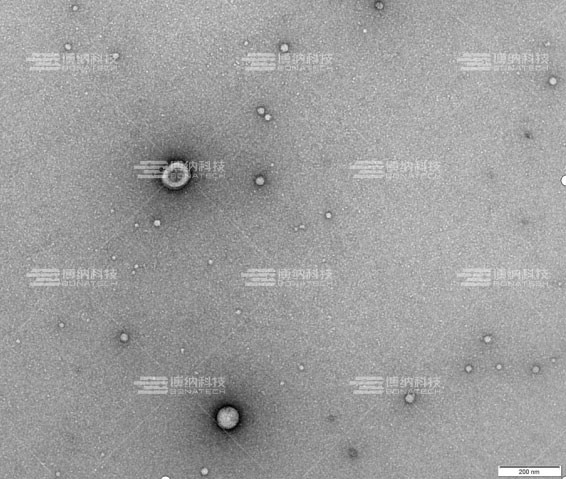
After obtaining the clarified filtrate, a hydrophilic hollow-fiber UF membrane (MWCO 100–300 kDa) is used for concentration and diafiltration. This step achieves high-fold enrichment of exosomes while effectively removing small-molecule pigments, phenol red, and salts, significantly improving purity. The resulting exosome concentrate, verified by electron microscopy, shows uniform distribution, intact morphology, and well-preserved bioactivity.
BonaTech's Core Advantages
BonaTech has independently developed clarification and enrichment processes tailored to crude plant-derived exosome homogenates, offering the following core advantages:
Full-Process Membrane Treatment
From clarification to concentration and diafiltration, the entire process uses membrane separation—no phase change, no thermal damage—ensuring high enrichment and high activity of exosomes.
Fine Process Control
By precisely controlling key parameters such as temperature, transmembrane pressure, shear rate, processing time, and buffer system, the process achieves high yield and high reproducibility.
Process Transferability
Based on the modular design of hollow-fiber membranes, process parameters are highly transferable, providing a consistent technical platform for moving from laboratory research to subsequent process development.
Key Process Parameters at a Glance
| Process Step | Membrane Type | Key Parameters | Performance |
|---|---|---|---|
| MF Clarification | Hydrophilic-modified hollow-fiber membrane | Equal-volume diafiltration | Stable flux >15 LMH |
| UF Concentration & Diafiltration | Hollow-fiber UF membrane (100–300 kDa) | Concentration factor >10× | Flux >20 LMH |
Exosome EM Images (Bamboo Leaf / Sea Fennel)
The exosome concentrate processed by BonaTech's membrane process, observed under transmission electron microscopy, shows uniform vesicle distribution and intact morphology—confirming the membrane process's good protection of plant exosome structural stability.