Home
News
About Us
Contact Us

Tangential Flow Filtration (TFF) Systems — BonaTech, covering Mini and Automatic TFF Systems

TFF — Tangential Flow Filtration Schematic Retentate Permeate
Overview

Why Crossflow?​

In biopharma and advanced materials, separation and purification should never be the bottleneck of production. BonaTech's Tangential Flow Filtration (TFF) uses a high-speed cross-flow mechanism to suppress fouling and polarization, letting you handle high-solids, high-viscosity feeds with confidence. Our TFF solutions cover the full workflow from process development to commercial production.

01

Stay Clean, Run Longer

Cross-flow shear sweeps away foulants automatically. No more mid-run clogging, even with thick, particle-heavy feeds.

02

Protect Activity, Maximize Yield

Low-shear, closed-loop design preserves sensitive biomaterials while pushing recovery rates to the maximum.

03

Lab to Production, Seamlessly

Proven linear scale-up from benchtop to commercial. Same channels, same parameters — just bigger membrane area.

System Architecture

Bona Tech TFF System

Our in-house lab delivers tailored configuration and end-to-end support for efficient selection. Scale smoothly from early development to clinical production on cGMP-ready dedicated or multi-function platforms.
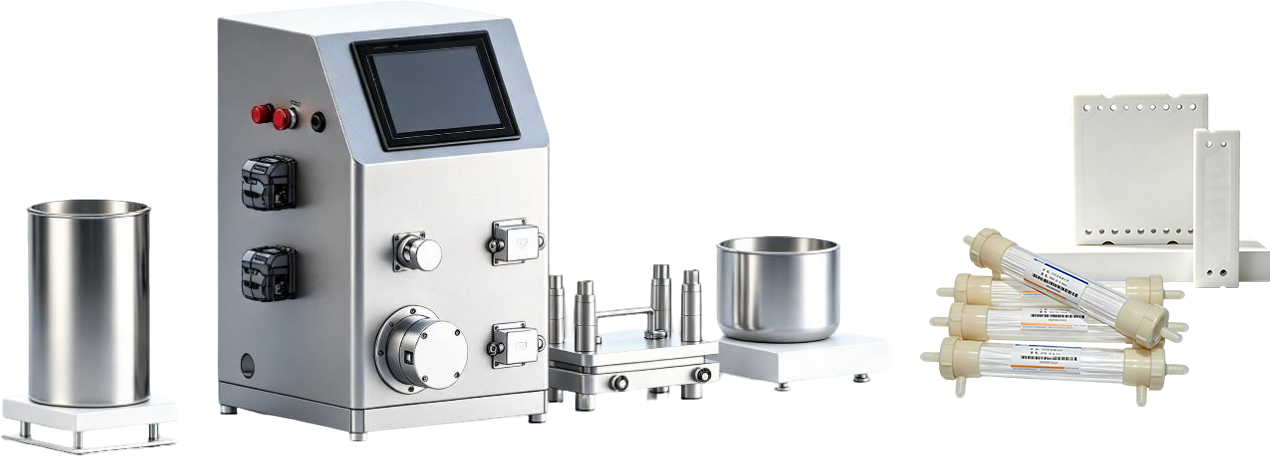
Overview of the four core components of a BonaTech TFF system
Feed Tank
Touchscreen PLC
Circulation Pump
Sanitary Clamp
Core Membrane Module
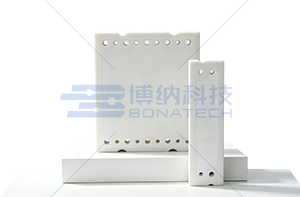
Core Membrane Elements

Core Membrane Elements

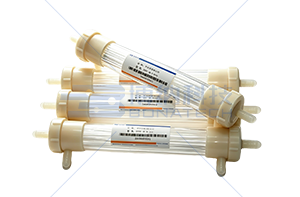
BonaTech TFF systems let you choose flat-sheet cassettes or hollow-fiber membranes, flexibly matched to your precision needs.

Flat-Sheet Cassette
FLAT-SHEET CASSETTE

Flat-Sheet Cassette

Microfiltration (MF)
0.05 μm0.1 μm0.2 μm0.3 μm0.45 μm
Ultrafiltration (UF)
1 kDa2 kDa3 kDa5 kDa8 kDa10 kDa20 kDa30 kDa50 kDa70 kDa100 kDa300 kDa500 kDa800 kDa
Nanofiltration (NF)
300 Da500 Da600 Da800 Da
Hollow-Fiber Membrane
HOLLOW FIBER

Hollow-Fiber Membrane

Microfiltration (MF)
0.1 μm0.22 μm0.45 μm0.65 μm
Ultrafiltration (UF)
1 kDa2 kDa3 kDa5 kDa8 kDa10 kDa20 kDa30 kDa50 kDa100 kDa200 kDa300 kDa500 kDa750 kDa
Bona TFF Systems

BonaTech TFF Systems

From benchtop trials to fully automatic production, covering different scales and automation levels.

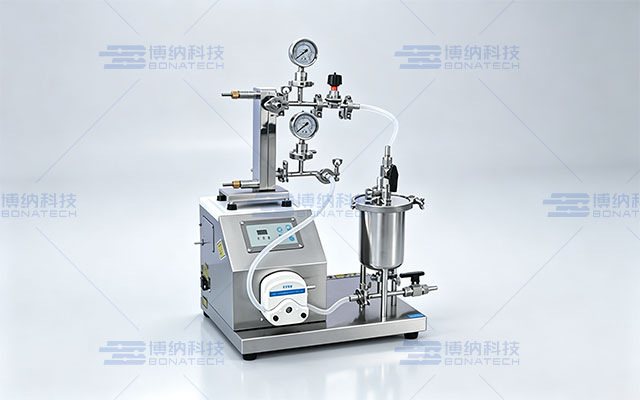
LAB SCALE Mini TFF System
Mini TFF System

Mini TFF System

Designed for lab trials and process development — compact and flexible, with parameters that scale directly to production. The entire system uses 316L electropolished tubing, GMP-compliant, and clamps 1–5 cassettes flexibly.

  • Benchtop design, small footprint, easy to move
  • Manual local control operation mode
  • Interchangeable MF, UF, and NF cassettes of different ratings
  • All tubing is SUS316L stainless steel
  • Minimum working volume: 50 mL–300 mL
Recommended Models
Request a Quote / Get Brochure →
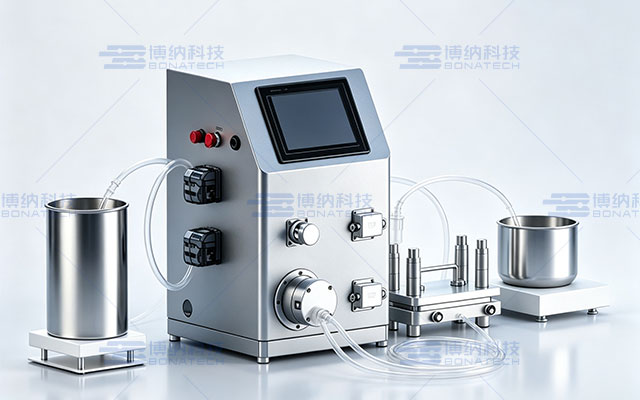
FULL AUTO Automatic TFF System
Automatic TFF System

Automatic TFF System

Fully automatic PLC control with built-in core sequences for concentration, diafiltration, CIP, and calibration, using closed-loop adjustment based on real-time membrane-flux-decay and TMP feedback to ensure consistent process endpoints batch after batch. The system supports external hollow-fiber cartridges for multi-purpose use.

  • Intelligent, automated software interface
  • Intuitive, powerful method editing and automatic control
  • Four-level permission management
  • Compliant, comprehensive audit trail
  • Result analysis and data storage
  • Data export
Recommended Models
Request a Quote / Get Brochure →
TFF Technology

Tangential Flow Filtration

The core of TFF is letting feed flow along the membrane surface. Driven by pressure, part of the feed passes through the membrane as permeate, while the rest flows tangentially across the surface, sweeping away deposits back to the feed tank for recirculation — repeating this cycle achieves continuous concentration and diafiltration.

  1. Feed & Circulation

    The diaphragm pump drives the feed to flow tangentially across the membrane at high velocity, creating shear that suppresses concentration polarization.

  2. Separation & Permeation

    Driven by transmembrane pressure (TMP), water and small molecules pass through the membrane as permeate, while target macromolecules are retained on the circulation side.

  3. Concentration

    Continuous recirculation and permeate removal reduce feed volume and raise target concentration, with recovery above 95%.

  4. Diafiltration (DF)

    Buffer is added while permeate is removed at the same rate, exchanging salts and small-molecule impurities to achieve purification and formulation exchange.

Tangential Flow vs Dead-End Filtration

Comparison Dimension
Tangential Flow (TFF)

Feed sweeps parallel across the membrane for long continuous runs — ideal for high-solids, high-value streams.

Dead-End

Feed is pushed perpendicularly onto the membrane and clogs easily — suited to clarification, low-solids, single-use filtration.

Key Metrics
Recovery

High (diafiltration up to ≥95%)

Recovery

Moderate, drops as it clogs

Suitable Scale

Lab scale → industrial scale-up

Suitable Scale

Mostly basic clarification

Applications

Typical TFF Applications

Tangential flow filtration reaches into every key stage of biopharma and fine separation.

FAQ

TFF Frequently Asked Questions

Common questions about choosing TFF vs dead-end filtration, membrane selection, system configuration, and cleaning & maintenance.

What is the difference between Tangential Flow Filtration (TFF) and dead-end filtration, and when should I choose TFF?

In dead-end filtration the feed is pushed perpendicularly onto the membrane, so solids easily accumulate and clog the surface — suitable for one-pass clarification of low-solids feed. In TFF the feed sweeps parallel across the membrane, continuously carrying retentate away, enabling long continuous runs ideal for concentrating and diafiltering high-solids, high-viscosity, high-value streams. Choose TFF when you need UF concentration, buffer exchange, or are handling feed with higher solids content.

How do I choose between flat-sheet cassettes and hollow-fiber membranes?

Flat-sheet cassettes offer high packing density and low membrane-replacement cost, with retention covering MF (0.05–0.45 μm), UF (1–800 kDa) and NF (300–800 Da), and materials including PES, regenerated cellulose, PVDF, composite (TFC) and polyamide. Hollow-fiber membranes are self-supporting with open flow channels, tolerate high-solids and high-viscosity feed, and are easy to clean, with ratings covering MF (0.1–0.65 μm) and UF (1–750 kDa). BonaTech engineers can help you select based on feed properties and process goals.

How do I determine the right membrane pore size or MWCO?

Generally select based on the molecular-weight gap between your target product and impurities: choose MF to remove cells and particles; choose a UF membrane whose MWCO is 1/3 to 1/2 of the target molecular weight to concentrate proteins, virus-like particles and other macromolecules; choose NF or pair with diafiltration to remove salts and small molecules. If unsure, send a sample for a BonaTech lab feasibility test, and we will define the membrane specification from flux and retention data.

How do I choose between a Mini TFF System and an Automatic TFF System?

The Mini TFF System is a benchtop design with manual local control, flexibly clamps 1–5 cassettes, and has a minimum working volume of 50–300 mL — ideal for lab trials and process development. The Automatic TFF System uses PLC control with built-in core sequences for concentration, diafiltration, CIP, and calibration, closed-loop adjustment from real-time flux-decay and TMP feedback, and four-level permission management with audit trails — suited to pilot and production. Both share identical process parameters for smooth scale-up.

How are concentration and diafiltration (DF) performed, and what recovery can be achieved?

During concentration the feed circulates in a closed loop while permeate is continuously removed, reducing volume and raising target concentration. During diafiltration, buffer is added to the loop while permeate is removed at the same rate, exchanging salts and small-molecule impurities. The system runs at ambient temperature with low shear, achieving diafiltration recovery ≥95% while fully preserving target activity.

Can the cassettes be reused, and how should they be cleaned and stored?

Yes. Both cassettes and hollow-fiber cartridges are reusable. Automatic models include an online CIP sequence, and with dedicated cleaning agents they can be regenerated from different fouling types such as organic and inorganic scaling. During shutdown, preservative solution is injected per specification for storage. Single-use options are also available, and membrane elements of every rating are supplied long-term.

Find the Right System for Your TFF Process

Submit your feed properties and throughput requirements, and BonaTech engineers will provide a customized selection plan and quotation.

Contact Us →